

Investing in property is highly profitable but it is also one of the most complex tax areas of finance. From rental income and allowable expenses to capital gains tax, stamp duty and ever-changing IRS rules, even a small mistake can cost property investors thousands each year. That time a real estate tax accountant becomes essential.
A general accountant may not understand the complications of residential, commercial and property taxation. Whereas, a real estate accountant understands how to structure property portfolios tax-efficiently, maximise legitimate deductions, and ensure compliance across personal, company, or partnership ownership models. Whether you are a first-time landlord or managing a growing property portfolio, the right expertise can make the difference between simply filing taxes, and strategically growing your wealth.
Furthermore, in this blog we will understand more about why property investors need a real estate tax accountant, the risks of relying on general advice, and how specialist support helps protect profits while staying fully IRS-compliant.
What Is a Real Estate Tax Accountant?
A real estate tax accountant focuses on the tax concerns of property ownership, investment, and development. Unlike a typical accountant, they are aware with the specific taxes that property owners pay, such as:
- Income Tax on Rental Income
- Capital Gains Tax on Property Sales
- Property Taxes
- IRS-Approved Deductions for Property Investors
They help property investors, landlords, developers, and real estate firms structure property ownership more efficiently, stay up to date on tax law changes, and legally reduce tax liabilities. They operate with a variety of property types, commercial real estate, multifamily housing, and properties owned by limited liability corporations (LLCs). Essentially, a real estate tax accountant assures that your investments are IRS compliant and tax efficient.
Why Are Real Estate Taxes Different ?
Real estate taxes in the United States are complex due to the three stages of taxation: purchase, ownership, and sale. Investors are subject to a variety of taxes, including property taxes, rental income tax, capital gains tax, and potential taxes on property sales. They must also handle deductions, costs, and tax relief alternatives, which are all subject to shifting IRS restrictions. These property-specific tax requirements differ from typical business or personal taxes and frequently necessitate close attention to be compliant with the frequently changed tax code.
Common Tax Mistakes Real Estate Investors Make
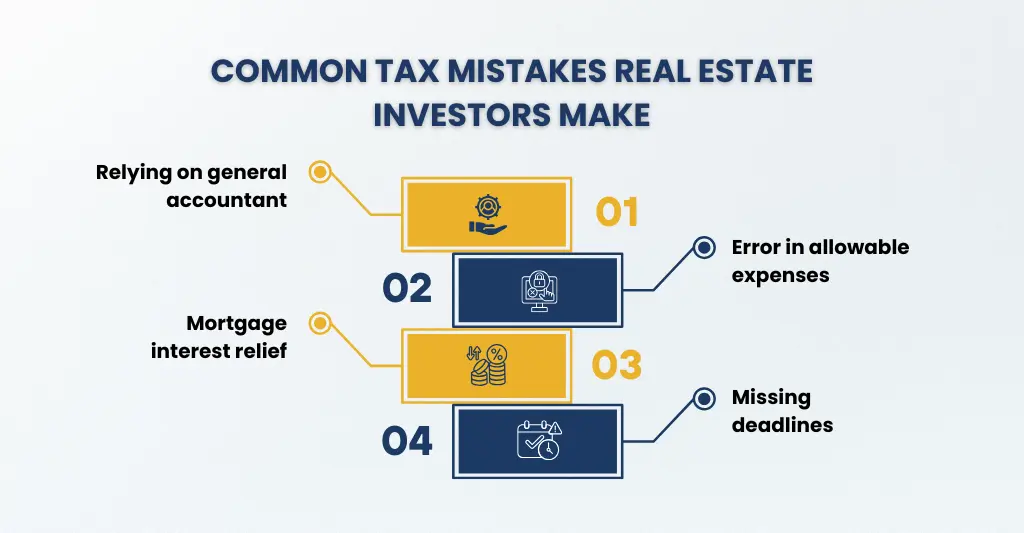
- Relying on general accountant: One of the most common mistakes made by real estate investors is depending on a general accountant who is not knowledgeable about property taxes. Property tax rules are quite detailed, and investors who lack specialised knowledge frequently lose out on legal chances to lower their tax liability.
- Error in allowable expenses: Another common concern is the improper treatment of allowable expenses. Some investors underclaim by being extremely careful, while others overclaim, risking IRS penalties for misinterpreting what qualifies as a deductible expense.
- Mortgage interest relief: Many investors misunderstand mortgage interest deductions, particularly for residential rental properties, which might result in unanticipated tax obligations. Another costly mistake is not planning for capital gains tax before selling a property. Without appropriate planning, investors may miss out on exemptions and deductions, leading to a larger tax bill when they sell.
- Missing deadlines: Furthermore, investors sometimes miss reporting deadlines, particularly for property transactions, which can result in fines and interest. Errors with stamp duty land tax, selecting the incorrect ownership structure, and failing to review tax tactics as portfolios grow can all impair profitability over time.
How a Real Estate Tax Accountant Helps You Save More Tax?
- Helps you declare all allowable costs appropriately and avoid IRS penalties.
- Provides guidance on mortgage interest relief and property-specific deductions.
- Plan property sales to minimize capital gains tax exposure.
- Identifies relevant tax reliefs and exemptions sometimes overlooked by non-specialists.
- Offers proactive tax planning, not simply year-end compliance.
- Ensures you comply with IRS reporting deadlines and rule changes.
- Review your property ownership structure to ensure that it is tax-efficient.
- Protects long-term earnings by coordinating tax strategy and portfolio growth.
When Should You Hire a Real Estate Tax Accountant?
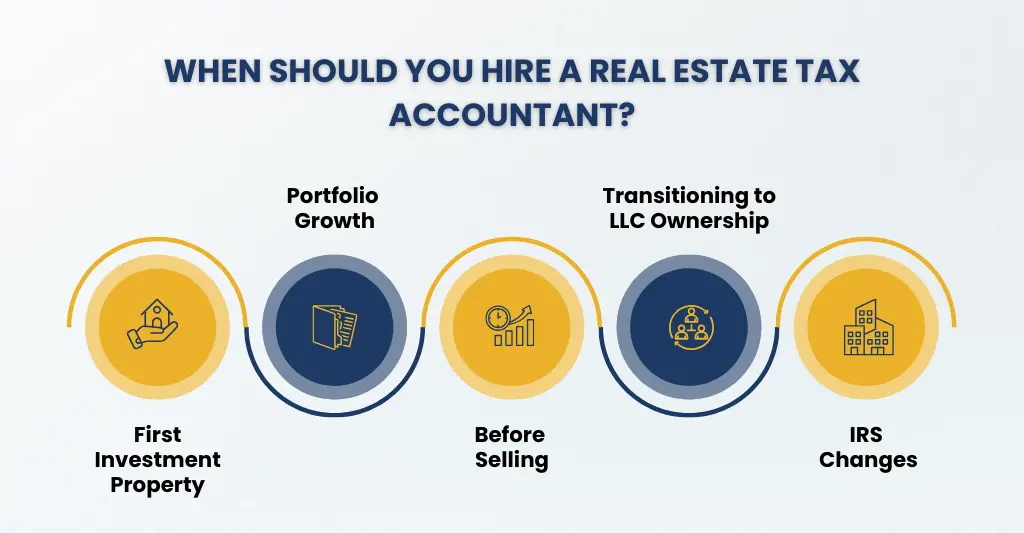
You should think about employing a real estate tax accountant as soon as property becomes a big portion of your income or investment strategy. Engaging a consultant early on can help you avoid costly tax mistakes and organize your investments more effectively.
Property management accountants are essential in the following situations:
- First Investment Property: While purchasing your first rental property, consult with a tax expert to ensure you understand all deductions and tax benefits.
- Portfolio Growth: The time when your portfolio grows an expert may guide you through complex tax arrangements for many properties.
- Before Selling: Plan in advance to reduce capital gains tax and take advantage of 1031 trades to delay taxes.
- Transitioning to LLC Ownership: A tax accountant assists you in transitioning from personal ownership to an LLC, assuring tax efficiency and compliance.
- IRS Changes: Stay compliant with shifting tax rules and benefit from proactive tax planning.
Hiring a professional property management accountant at an appropriate moment allows you to remain compliant, limit tax exposure, and make informed decisions that enhance long-term property wealth.
Why Do Real Estate Investors Choose E2E Accounting?
Real estate investors prefer E2E Accounting because we combine property-specific tax expertise with practical, investor-focused advice. Our expertise understands the complexity of rental income, capital gains tax, stamp duty, and portfolio structure, so you will get advice that goes beyond basic compliance.
We work directly with landlords, property developers, and portfolio investors to lawfully minimize tax, increase cash flow, and assure complete IRS compliance. With clear reporting, proactive tax planning, and scalable support as your assets grow, E2E Accounting operates as a long-term partner, not just an accountant.
Maximize Your Property Investment Returns with Expert Real Estate Tax Accounting. Get personalized advice to navigate tax complexities, ensure compliance, and strategically grow your wealth. Contact us today for a consultation!
FAQs: Frequently Asked Questions
Do I need a specialized accountant if I only have one rental property?
Yes. Even a single home has significant tax implications. An expert may assist you in claiming the appropriate costs, planning ahead for capital gains tax, and avoiding costly IRS mistakes.
Is it better to own property personally or through a limited company?
There is no simple solution that works for everyone. Property management accountants evaluate your income, future plans, and portfolio size before recommending the most tax-efficient structure for your situation.
What does a real estate tax accountant do?
A real estate tax accountant specializes in property-related taxes like rental income tax, capital gains tax, stamp duty, and portfolio structuring. Their mission is to ensure compliance while assisting investors in legally reducing taxes and protecting their returns.
Conclusion : Secure Your Financial Future
Property investing involves both smart tax planning and selecting the correct assets. With complex and ever-changing tax rules, relying on basic guidance can reduce returns and raise risk. Working with a specialist real estate tax accountant ensures that your investments are properly organized, IRS-compliant, and in line with your long-term financial objectives.
When you choose property management accountants from E2E Accounting, you obtain clarity, confidence, and a proactive tax approach that helps protect profits and preserve your financial future as a property investor. Get in touch with us.