
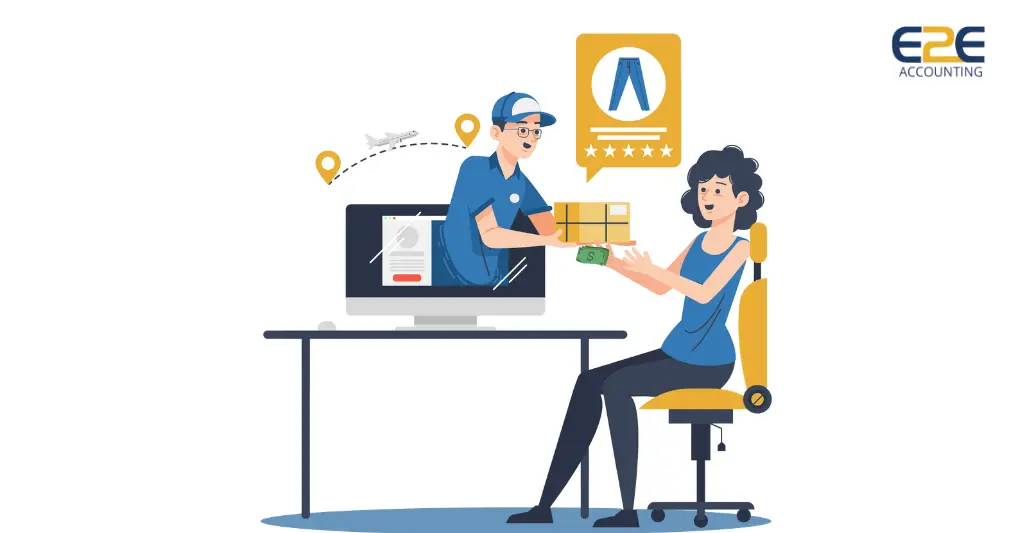
Introduction to Cash on Delivery Accounts in U.S. eCommerce
Cash on Delivery – a vital payment option for US-based e-commerce businesses that still has a place in the online shopping world. For many customers out there, its the preferred way to pay – ie when they physically receive the product rather than part with their cash online. But managing a Cash on Delivery account can be a nightmare, especially when it comes to tracking down payments and making sure your accounts are all square.
To keep your cash flow from getting all gummed up, it’s essential to get to grips with how to manage your Cash on Delivery accounts properly.
A Step-by-Step Guide to Managing Cash on Delivery Accounts
Managing a Cash on Delivery account involves several key steps from the moment an order is placed right up till the cash lands in your business account. Let’s just outline a typical workflow:
Step 1: Customer Order Entry
So, for example, when Sarah pops up on your site and orders a greenhouse kit worth $100, and selects the Cash on Delivery option, the system flags that order as “Awaiting Payment” and that shiny new Cash on Delivery account in your books just gets updated – but still no revenue is officially in the books just yet
Step 2: Handing Over to the Courier
Once Urban Sprout got the greenhouse kit all packed up and handed it over to the courier, the courier’s manifest is just updated to show that Sarah has to pay $100. The order status then gets changed to “On the move” and your Cash on Delivery account just reflects that its on it’s way.
Step 3: Delivery & Payment Collection
Eventually the courier arrives at Sarah’s house, she inspects the product and pays the $100 cash to the courier. At this point the courier has got the payment but still hasn’t passed it on, so the order status gets updated to “Delivered & Collected” – but still no payment is actually in your Cash on Delivery account.
Step 4: Courier Payment
Its only when the courier finally sends the cash over ( minus their handling fee of course) that the Cash on Delivery account in your books gets updated and you can get it reconciled.
Step 5:Accounting Reconciliation
And finally, when the payment does actually land in your account – basically when your accountant gets their hands on the cash and makes sure everything matches up – any courier fees are just filed away as “Logistics Expenses”. This final step closes the loop on the COD cycle. For a deeper look at how eCommerce reconciliation works across platforms, see our Ecommerce Accountants page.
Key Risk Factors in Cash on Delivery Orders
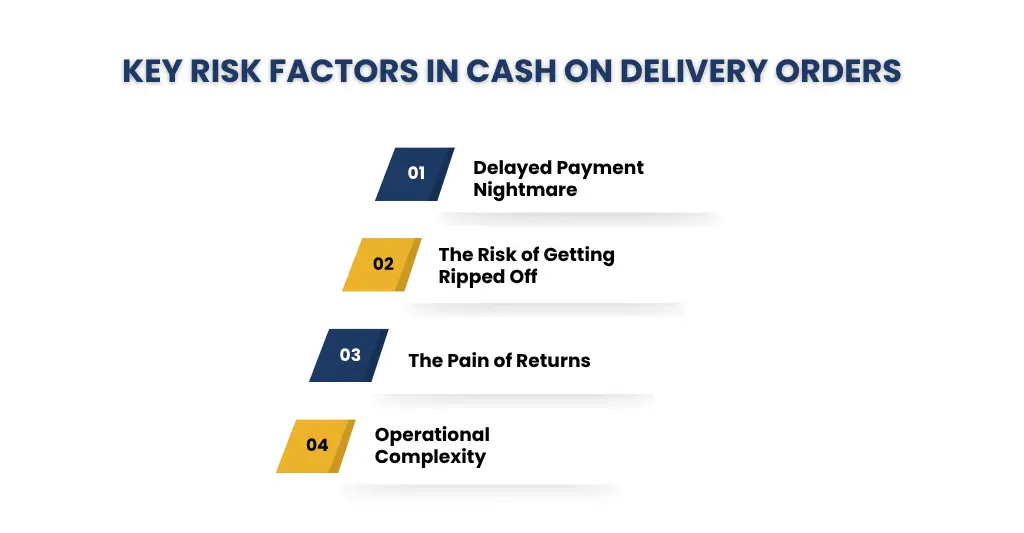
1.Delayed Payment Nightmare:
One of the biggest headaches with Cash on Delivery Accounts is that cash can take ages to show up in your account. Merchants are stuck juggling the gap between sending out the order and actually getting paid. That can be anywhere from a few days to a week or more, depending on what the courier’s schedule looks like.
2.The Risk of Getting Ripped Off:
When it comes to Cash on Delivery Orders there’s a big risk of getting burned by scammers. If customers just refuse to pay when the item is delivered, you’ve got a lose situation on your hands. So it’s super important to have a system in place that can help you manage those risks and cut down on the number of orders that get rejected.
3.The Pain of Returns:
COD orders tend to get returned way more often than prepaid orders do. And that means you’re likely to get stung with extra shipping costs. If returns start piling up, it can really eat into the profit margins on your Cash on Delivery Accounts. So finding ways to make returns easier to manage is key to stopping the bleeding.
4.Operational Complexity:
Managing a Cash on Delivery Account requires close coordination with couriers, as well as diligent tracking and reconciliation. Without automated systems, the reconciliation process can become cumbersome, leading to inaccuracies.
Best Practices for Handling Cash on Delivery in the US
Setting Up a Dedicated COD Bank Account:
Create a separate cash bank account specifically for COD payments so you can keep track of the cash while its in transit. That way you don’t mistake it for available cash even when its still being transported by the courier. When an order is shipped out, the cash is moved into your COD account, then when the courier actually delivers the cash you transfer it to your real bank account. This mirrors best practice in eCommerce bookkeeping, where clean separation of funds prevents reconciliation headaches later.
Differentiating Between Gross Sales and Courier Fees
Recording the total sale price as revenue (e.g. $100) is essential as well as marking down courier fees (e.g. $5) as expenses – dont lump those two together in the same COD account, or you will get skewed financial reports.
Tracking Returns And Losses on COD Orders:
If a customer sends a COD order back – which happens – you should clearly categorise it so you can see whether cash on delivery is for you or not. Set up a category in your COD account for return losses and the expense of shipping back out the item if need be.
Cash Flow Challenges with Cash on Delivery Accounts in U.S. eCommerce
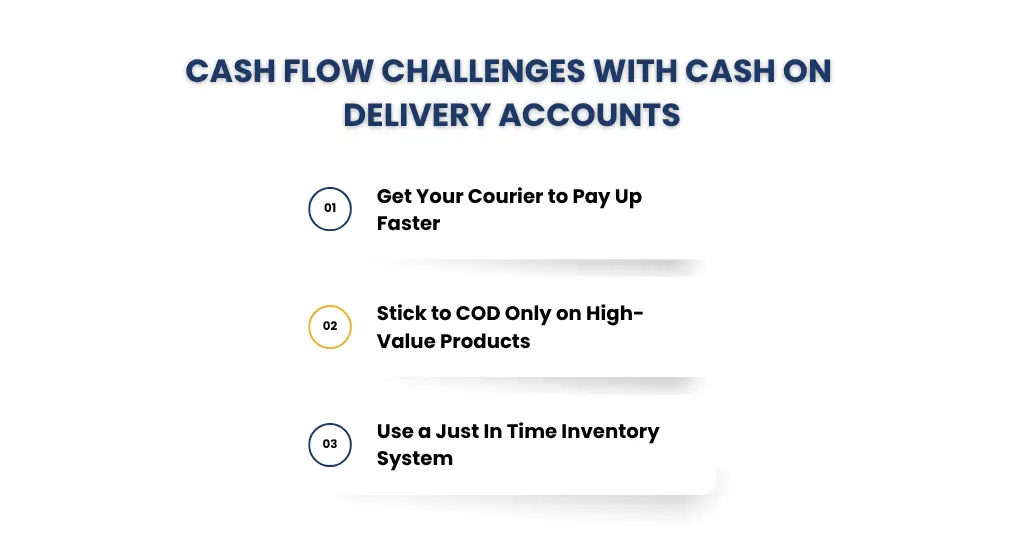
The main hassle with Cash on Delivery Accounts is this cash flow delay. Your business might lay out cash for inventory, packaging and shipping upfront, but you don’t see the money until the courier decides to pay up. Here’s the way you can do better at managing your cash:
Get Your Courier to Pay Up Faster:
In the States, some couriers offer a daily or even more frequent cash back to merchants for COD orders, which can give a big boost to your cash flow. Consider working out a deal with your courier to get the cash back to you sooner for your Cash on Delivery Account. Our guide on Amazon Seller Taxes also covers how payment timing affects tax obligations — worth reading in parallel.
Stick to COD Only on High-Value Products:
Limiting COD to the products that have high profit margins will help offset the potential risks and costs that come with RTOs.
Use a Just In Time Inventory System:
Using just in time inventory practices means that your capital doesn’t get stuck on stock or being sent to your customers, so your Cash on Delivery Account stays a lot more liquid.
You shouldn’t have to wait weeks to see money that’s already been delivered. E2E Accounting helps eCommerce businesses set up smarter COD systems, negotiate better courier terms, and reconcile payments with zero guesswork.
Talk to an eCommerce Accountant Today →
Common Problems with Cash on Delivery Accounts – How to Tackle Them
What’s Going Wrong with Returns (RTO):
Sort It Out: Try using automated checks via text or email to make sure customers have actually placed an order before you send it out. That’s a pretty simple trick that can make a big difference in cutting down RTO rates & keeping your Cash on Delivery Account out of trouble.
Trouble With Reconciliations:
Get It Right: Use a proper system to match up courier payments with orders, making it way easier to sort out any discrepancies in your Cash on Delivery Account and reduce mistakes. Our Bookkeeping Services can help you build a system that handles exactly this.
Dealing with Cash Theft and Shortfalls:
Switch to a Better Way: Think about using digital payments through a mobile POS or QR code, so customers can pay without cash – this leaves a lot less room for theft and makes it easier to get accurate records in your Cash on Delivery Account.
Software to Simplify Managing Cash on Delivery Accounts
- Accounting Software Integration: Integrate your eCommerce platform with accounting software like Xero or QuickBooks to automatically track COD transactions and ensure accurate financial reporting.
- AR Management Tools: Use platforms like Kolleno to automate the reconciliation of COD payments, helping you track aging receivables and reduce manual errors.
- Courier Management Platforms: Leverage tools like ShipStation to centralize courier status updates in one dashboard, making it easier to manage multiple couriers and streamline your COD processes.
FAQs: Frequently Asked Questions
What is a Cash on Delivery Account in eCommerce?
A Cash on Delivery Account tracks payments made in cash when the product is delivered, rather than upfront. It’s a receivable until the courier remits the collected cash to your business.
How do I reconcile payments in my Cash on Delivery Account?
Reconcile COD payments by tracking them in a COD Clearing Account until the courier remits funds. Once the payment is deposited, match it to the original order and account for courier fees.
What are the best practices for managing Cash on Delivery Accounts in eCommerce?
Use a COD Clearing Account, track courier fees separately, reconcile payments regularly, and monitor returns to optimize COD management.
How does Cash on Delivery impact my eCommerce cash flow?
COD creates a delay in cash flow, as payments are received after delivery. To manage it, negotiate faster remittance with couriers or use strategies like Just-in-Time Inventory to free up cash.
Struggling with COD Reconciliation?
Let E2E Accounting handle it — so your books stay clean and cash flows faster.
Conclusion: What You Can Actually Do Now
Getting your Cash on Delivery Accounts under control requires a bit of discipline, a bit of automation and a healthy dose of attention to detail. By following some of the best practice tips we’ve covered here you can unlock the benefits of offering COD while keeping your cash flow and accounting in order.
Actionable To-Do List:
- Audit time: Have a good look at all those open COD orders and see if there’s any payments hanging around for more than 14 days.
- Create a special cash account: Set up a separate account specifically for tracking payments that are in the process of being made.
- Get organisational: Get your system set up to verify customers on bigger orders to reduce the risk of lost shipments.
- Get on the phone with your courier: Sort out a better payment schedule with them – it can make a big difference.
Managing Cash on Delivery reconciliation, courier fees, and returns is a lot to handle on top of running your business. Our eCommerce accounting specialists at E2E Accounting take the complexity off your plate — so you get paid faster and your books stay clean.